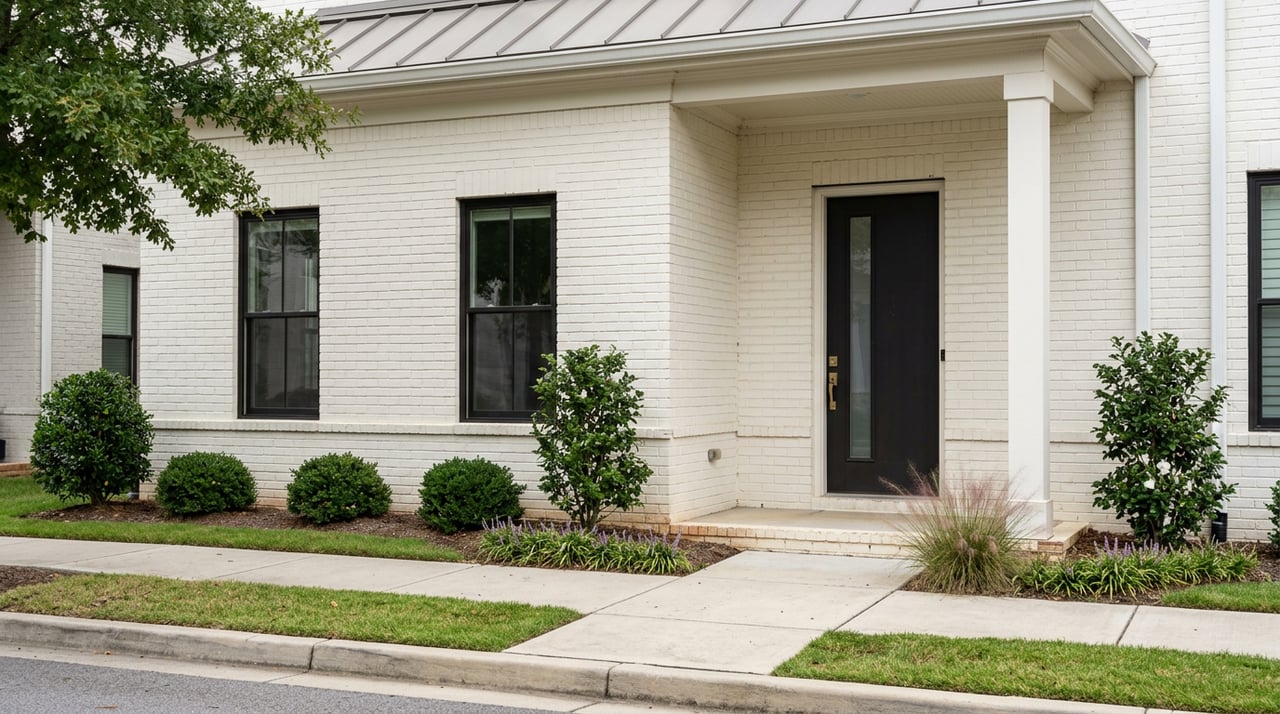
1819 News reported that Steven Dixon sat on the Auburn City Council for four years. He recused himself from the votes on the city's short-term rental ordinance in 2021; at the time, he was renting out the basement of his own home, in a Neighborhood Conservation zone, on a short-term basis, and had been since 2018, well before the city had any rule governing the practice. When the ordinance passed and excluded his zone entirely, he didn't stop. He fought it. The case went all the way to the Alabama Supreme Court, which, as BNB Calc reported, ruled in October 2023 that the city had every right to ban short-term rentals in that zoning district, and that having rented there before the ban existed created no protected claim to keep doing it after.
Dixon's case is a reminder that the ordinance has real consequences for property owners. In Auburn, whether a specific address can legally operate as a short-term rental has almost nothing to do with how close it sits to campus, how the neighborhood feels, or what the current owner has been doing with it. It comes down to a line on a zoning map, and that line has now been tested in court and held.
The Map Decides, Not the Neighborhood
Auburn's ordinance splits short-term rentals into two categories, with different rules for each, but both run through the same gate: the zoning district the parcel sits in.
Four residential districts have short-term rental restrictions: Neighborhood Conservation, Development District Housing, Limited Development, and Large Lot Residential. These are Auburn's traditional single-family zones.
The City of Auburn short-term rental FAQ lists non-primary rentals as permitted outside those four zones in Urban Core, Urban Neighborhoods East, West, and South, Comprehensive Development District, Redevelopment District, Medium Density Redevelopment District, several Corridor Redevelopment districts, and the Rural zone. Homestays have a wider footprint. The City of Auburn homestay FAQ says they're allowed citywide except in Industrial and South College Corridor districts, which aren't residential to begin with.
Here's the detail that should change how you read any Auburn listing: the same zoning name doesn't always mean the same rule. Corridor Redevelopment and Neighborhood Redevelopment districts are treated differently depending on which side of North Donahue Drive the parcel falls on. East of Donahue, a non-primary short-term rental is allowed. West of Donahue, in a district carrying the identical zoning label, it is not. Two addresses with the same zoning designation, a few blocks apart, can land on opposite sides of a legal line that has nothing to do with either property's condition, price, or proximity to Jordan-Hare Stadium.
The only way to know for certain is to check the parcel itself. Auburn maintains a live zoning tool for short-term rentals that shows, address by address, whether a property falls in a permitted district. That check belongs earlier in the process than most buyers put it, ideally before an offer, not after closing.
Settled Law, Not a Debate in Progress
A fair amount of what's written about this ordinance online still describes it in the language of 2021: a "proposed" rule, still working through council votes, still open to argument. That language describes the legislative process that produced the ordinance, not its current status. The council adopted the amended version at its March 2021 meeting, as the Opelika-Auburn News reported. The Alabama Supreme Court closed the door on the main legal challenge to it in 2023. The city's own short-term rental page is, as of this writing, actively processing 2026 renewals for both homestay and non-primary operators, which tells you plainly that this is a functioning, enforced system rather than a policy still finding its footing.
The enforcement mechanics are specific. Non-primary rentals are subject to city requirements. The Opelika-Auburn News reported that the business license fee is set at a quarter of one percent of gross receipts, with a $100 minimum. Both license types run on a two-strike system: two substantiated complaints against a property within a calendar year revoke the license for the rest of that year and all of the next. Non-primary rentals also carry a 240-day annual operating cap The Opelika-Auburn News reported that violations of the underlying zoning ordinance can run up to $500 a day, and that the city intends to enforce the fine on football weekends the same as any other week.
None of this changes based on how a listing agent describes the property, and it doesn't change if a homeowners association separately allows short-term guests. Auburn's city government has stated directly that it does not enforce HOA covenants. That cuts both ways for a buyer. A property inside a zone that permits non-primary rentals can still be blocked by its own HOA. A property inside an HOA that welcomes short-term guests can still be sitting in a zone that prohibits the use outright, regardless of what the HOA says. Two separate approvals, city and community, both have to line up.
The Income Number That Won't Hold Still
If the zoning question has a clear, checkable answer, the income question doesn't, at least not a single one. A dataset dated late April 2026 put Auburn's average annual occupancy at 23 percent, with a $216 average daily rate across 208 active listings. A separate estimate pulled in early September 2026 put occupancy at 40 percent with a $388 average daily rate for the same market. Neither source is wrong so much as differently weighted. The spread itself is the finding: any single occupancy number handed to you during a purchase conversation is a modeling choice as much as a market fact.
What holds together better is the revenue estimate. The April 2026 dataset put median annual host revenue at $27,456. A separate aggregator, without a specific date attached to its figures, puts the median closer to $26,512 a year, with top performers clearing $38,889 or more. Those two land within a thousand dollars of each other despite disagreeing sharply on occupancy and rate. That convergence suggests the underlying demand pattern, not the modeling method, is what's driving the number: Auburn's short-term rental income is concentrated in a handful of high-intensity weekends, football Saturdays and graduation chief among them, with long stretches of thinner demand in between. A property that looks unremarkable on an annualized occupancy chart can still be a strong performer if it's priced and marketed correctly around six or seven fall weekends.
There's also a supply signal worth sitting with. The April 2026 count of 208 active listings reflected growth of about 119 percent from the year before. That kind of growth in available inventory, arriving faster than the demand pattern is changing, tends to compress margins for new entrants over time. A buyer running numbers today should treat any single occupancy figure as a rough sketch and build a calendar-based model instead, one that prices peak weekends aggressively and plans conservatively for everything else.
Before You Write the Offer
For a buyer who has already decided Auburn is the market, the order of operations matters more than the enthusiasm.
- Pull the address on the city's zoning tool first, before touring, before writing an offer, and confirm whether the parcel sits in a district that permits homestay use, non-primary use, both, or neither.
- If the district allows the use, check the property's HOA documents separately. City approval and HOA approval are two different questions with two different answers.
- Budget for the applicable licensing and registration requirements.
- Model income around the calendar, not the annual average. Auburn's short-term rental economics run on a handful of concentrated weekends more than on steady year-round occupancy.
A Few Questions Worth Asking Before You Call a Lender
Does the ban apply if a property was already operating as a rental before I bought it? Yes. This is the exact argument the Alabama Supreme Court rejected in 2023. A history of prior use in a zone that now prohibits short-term rentals does not create a right to continue.
If my HOA says short-term rentals are fine, does that settle it? No. The city has said directly that it does not enforce HOA covenants, and the reverse holds too. Zoning determines whether the use is legal at all. The HOA determines whether it's permitted inside that specific community. Both have to say yes.
What are the fines for zoning violations? Violations of the underlying zoning ordinance can run up to $500 for each day the violation continues. The city has stated it enforces this on football weekends the same as any other time of year.
If you're looking at an Auburn property with short-term rental income in mind, the zoning check belongs at the front of the process, not somewhere after you've already fallen for the listing photos. Carter Pair works with a good number of buyers walking exactly this path, from the first address check through the closing table and the setup that follows, and can help you sort a workable investment from one that only looks like it on paper.
This article is general information, not legal, tax or financial advice. Consult a qualified professional about your situation.